

Why Utilities Are Programming for EVs in 2025
Before the Inflation Reduction Act's EV tax credit expired at the end of September 2025, 400,000 Americans took the EV plunge in the third quarter of 2025. In fact, Cox Automotive reported nearly 30% growth of EV sales for Q3 of 2025 compared to Q3 of 2024. This adds up to a lot more vehicles plugging into charge on the grid.
EV adoption has reached a point where North American utilities cannot ignore its grid impacts. These cars might not be burning down service transformers just yet, but utilities are now actively planning to have mitigations in place before adverse grid impacts occur.
In response to new EVs charging on the grid, residential managed charging initiatives have grown in number and scale. Utilities are uniquely positioned to help customers decarbonize, but they still have a mandate to deliver safe, reliable and affordable power.
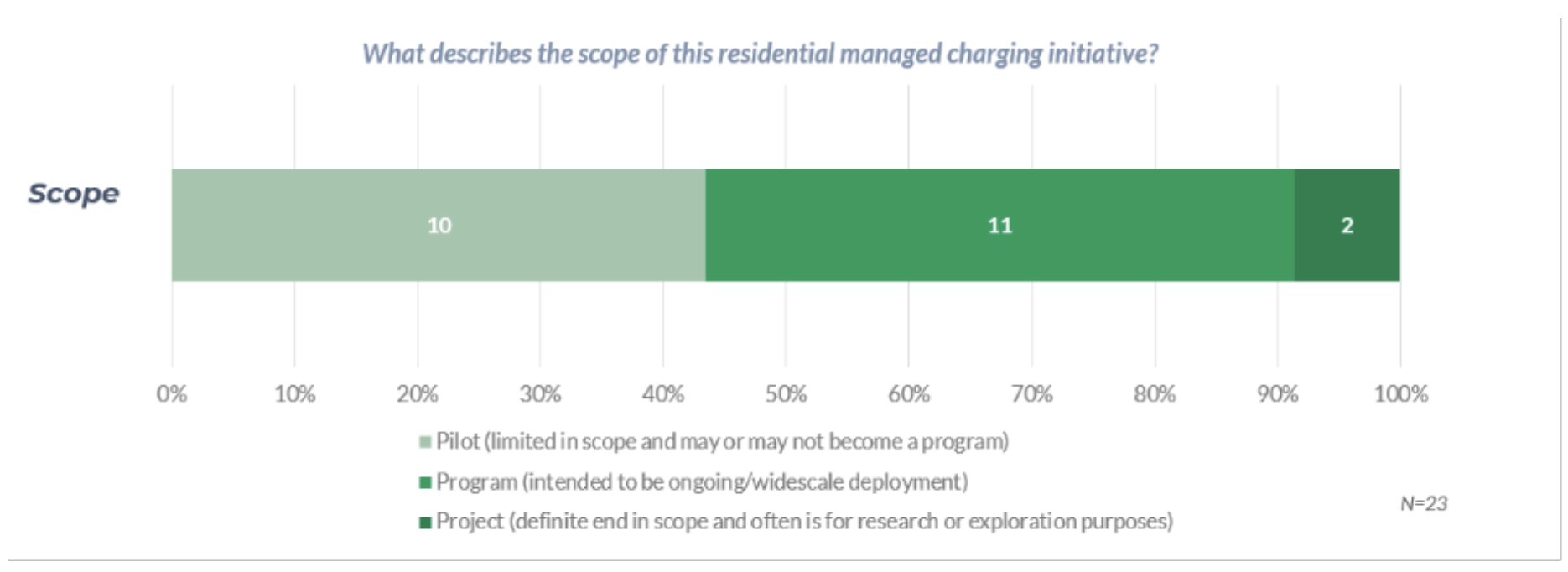
EV managed charging platforms, software that dictates when and how fast customers charge their vehicles based on customer preferences and grid infrastructure, can achieve that. So, regulators are increasingly approving the shift from pilot scale demonstrations to widescale EV managed charging programs.
To capture emerging trends in managed charging during 2025, Darcy Partners benchmarked over twenty utility residential EV managed charging initiatives across the US and Canada.
Darcy Partners Study Overview
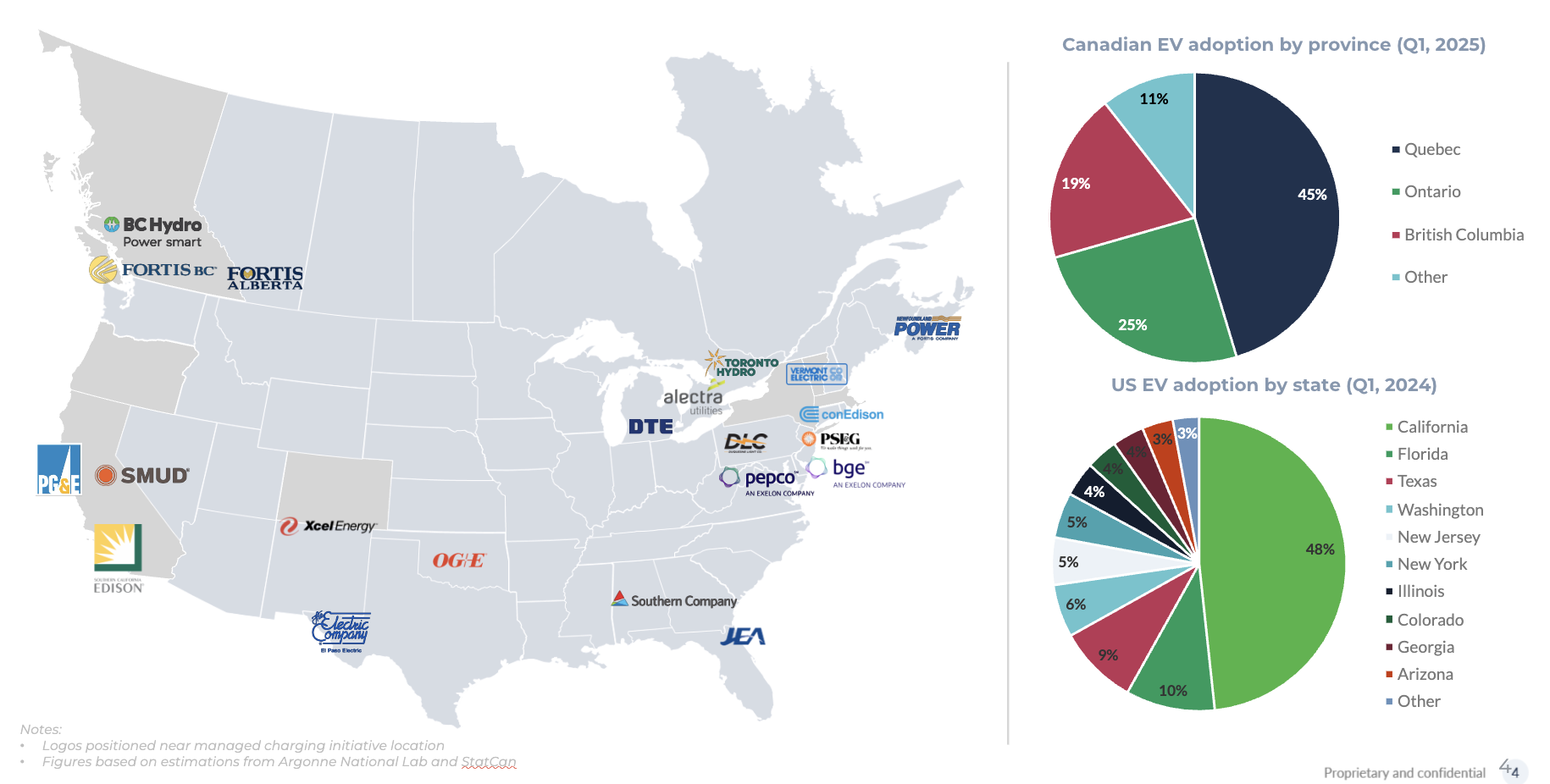
Darcy’s 2025 benchmark survey spanned geographies and business models, from California investor-owned utilities to a Canadian Crown corporation, to a rural New England cooperative.
This allowed for an evaluation of different approaches, objectives and outcomes. The resulting study benchmarked a plethora of different initiatives, from nascent pilots to full-fledged programs.
Respondents stressed the importance of getting EV program design teams, marketing teams, IT teams, grid planning and customer service teams on the same page, but “internal competing priorities or misalignment between departments” was difficult to overcome.
For many utilities, especially those with lower levels of EV adoption and corresponding low levels of managed charging enrollment, the cost of implementation was a challenge.
“With a combination of paying vendor fees, customer incentives, customer support fees and device monthly fees, this pilot is not cost effective right now," one utility respondent lamented.
For their part, software providers offer differing pricing models. Some providers offer a high upfront “set-up” cost and smaller overall subscription feed; others propose a more modest “set-up” cost, but they charge extra for each device enrolled in the program. It can be hard for a utility to predict what sort of model will be best in the long term, and there is a fear that changing vendors will be challenging.
For the range of challenges, programs had common successes. Most utilities cited that their program was working at its core; they were able to effectively shift EV load to low-stress times with very few customer opt-outs and high customer satisfaction.
What Matters - Utility Priorities for EV Managed Charging
Local Grid Reliability is Priority
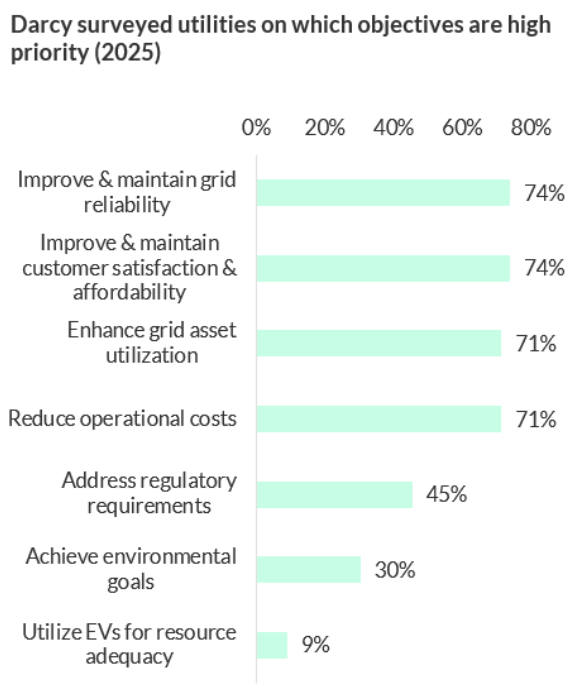
Nearly all utilities surveyed shared a top objective of grid reliability. This includes compliance with delivery voltage, i.e., ANSI C84.1 and avoiding premature asset failures, i.e., thermal overloads.
Very few utilities have traced adverse grid conditions back to EV charging yet, but the sentiment across nearly every survey respondent was that it takes time to “get the ducks in a row,” from program design and implementation to billing and customer service around EV programs. So organizational alignment is necessary to prevent reliability issues on the horizon.
Customer affordability is another high priority that has not proved cost effective yet for all utility managed charging initiatives.
The industry is coming to terms with a convergence of capital needs (resilience, load growth, asset renewal, decarbonization, etc.); utilities indicated that managed charging is a key enabler to both consumer preference and downward pressure on energy bills.
If utilities succeed with minimizing peak load contributions from EVs, they effectively boost asset utilization; in other words, if the revenue utilities collect from EV charging exceeds the incremental costs, all customers (not just EV owners) benefit from lower rates. (Darcy covered the intersection of transportation electrification and energy affordability here - must be a Darcy member to view.)
Ease of Enrollment was Paramount for Customer Satisfaction
Many utilities offer both active and passive managed charging options. The active managed charging option allows the utility, via software, to directly control when and the rate at which a customer’s vehicle is charging.
The passive option allows the customer to control when charging is happening but includes behavioral nudges. (For these nudges, think: a text message or an email letting you know it is a good, inexpensive time to charge right now based on your time-of-use rate.)
Utilities suggested that having both options allowed customers to choose what option was most comfortable. Having a passive option also allowed them to include customers that might have connectivity issues with the active managed charging option.
Innovator Highlights
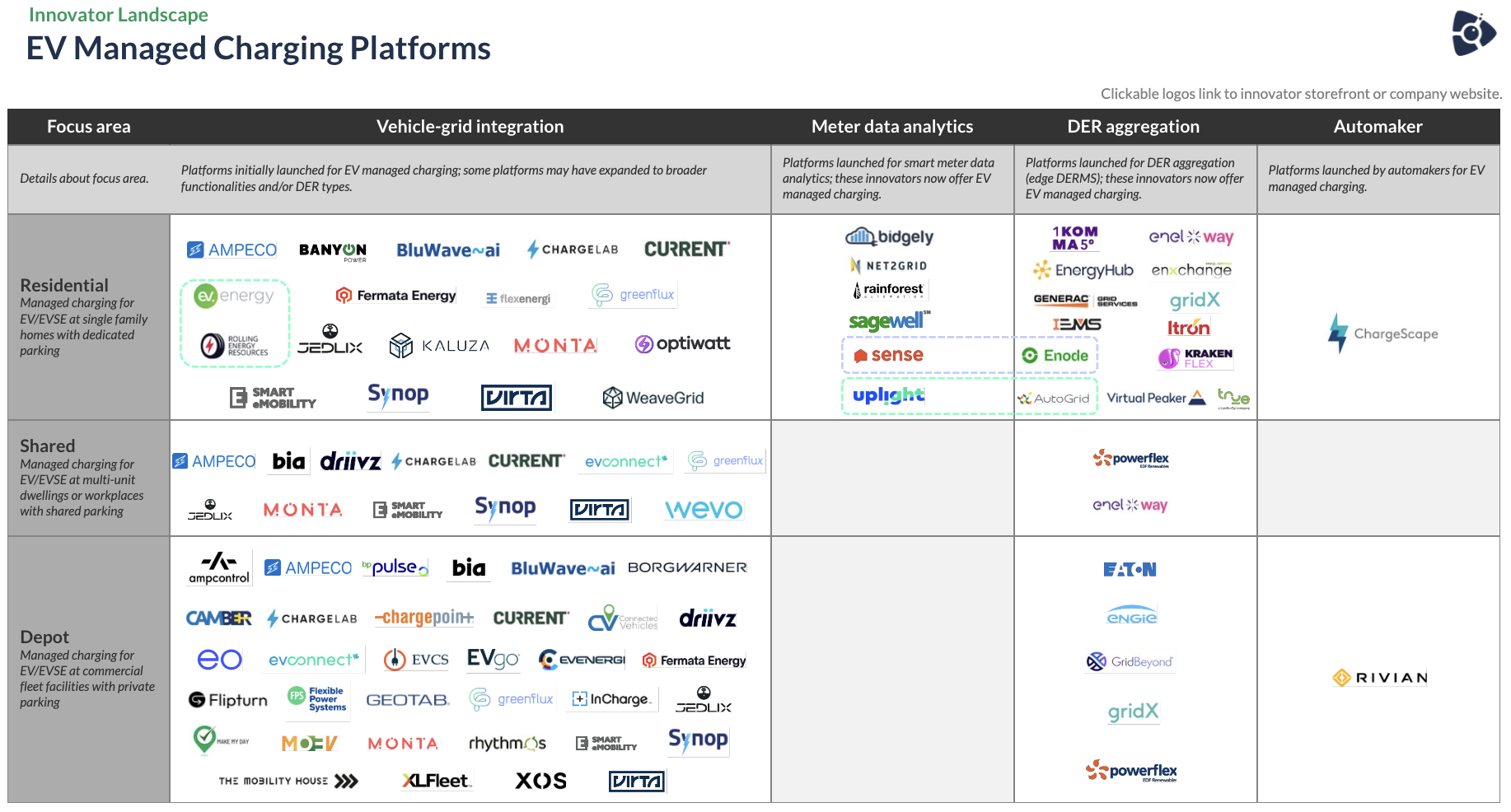
The most used technology partners listed in our survey included: WeaveGrid, ev.energy, and ChargeScape (must be a Darcy member to view innovator storefronts).
WeaveGrid only uses direct OEM partnerships and direct access to telematics; they do not use any API aggregator partners (i.e., SmartCar, Enode, etc.). They also have been testing a DISCO (distribution-integrated smart charging orchestration) solution that allows for more granular dispatch of charging schedules based on the ratings of grid assets and how those assets connect to each other.
Notably, WeaveGrid partnered with Exelon utility, Baltimore Gas & Electric on the Smart Charge Management program, which won a 2025 PLMA Award. (Fun note: Toyota drivers can enroll in the program using the Toyota app.)
ev.energy takes another approach. While they have some direct partnerships, the organization also utilizes SmartCar and other API aggregators to get access to a plethora of devices.
ev.energy’s managed charging program with Con Edison boasted the highest enrollment level of programs studied, with 28% of EVs in their service territory enrolled.
ChargeScape is a joint venture between BMW, Ford, Honda and Nissan. Notably, all utilities partnering with ChargeScape also combined forces with another software provider to gain access to more devices than just those under the ChargeScape umbrella.
Check out our managed charging framework below to see different technology providers in the managed charging space.
Outlook
Utility respondents expressed that managed charging programs are now an imperative; with electricity affordability taking center stage in 2025. With distribution CAPEX becoming the top line-item for many large utilities, managed charging offers a compelling pathway to deferring, or outright avoiding, costly system upgrades and delivering a more affordable service to customers.
This outcome requires building customer trust, garnering commission buy-in, collaborating with stakeholders including different utility teams, auto-OEMs and software providers, and using innovative technologies that allow for more granular understanding of EV's impacts on the grid.
The Darcy team is excited to continue to benchmark the managed charging space, highlight key lessons learned and best practices, and uncover the industry’s top success stories.
Concluding Thoughts
The Darcy team would like to acknowledge the valuable input that each utility respondent was able to provide, from survey design through discussions around results. The survey helped us confirm that our industry is still perfecting and growing managed charging initiatives, so operational insights from a leading cohort of utilities remain important.
If your utility did not get the chance to participate and would like to better understand the North American managed charging space, please get in touch with Edie Wilson at edie@darcypartners.com.
Read the study and contact Darcy to become a member.
